
Cristie VA 5.3.1 What’s New
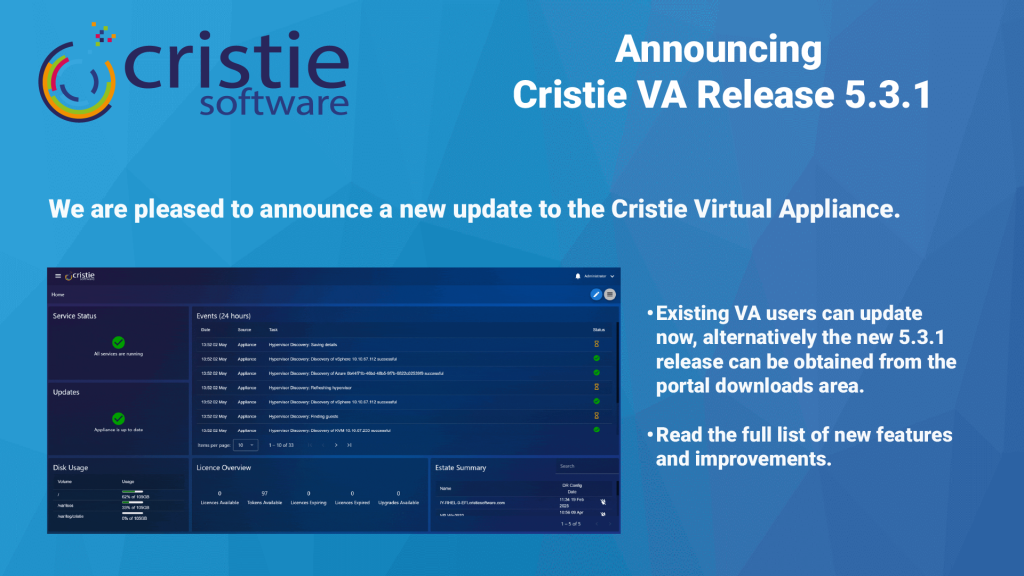
Here’s an update on what’s new for the Cristie Virtual Appliance. The 5.3.1 release includes lots of new functionality including Continuous Recovery Assurance for Rubrik VM snapshots.
Configure pre- and post- boot actions with sequenced orchestration jobs and tasks.
The Cristie Virtual Appliance (VA) provides a single recovery platform for Windows, Linux, AIX & Solaris based platforms.
Recover systems in the correct sequence to cater for application dependencies such as Active Directory & Domain Controllers.
Remove complexity and save time when recovering systems to dissimilar hardware with automatic driver insertion.
Remove manual intervention from the recovery workflow which is the biggest cause of prolonged downtime.

IT systems are invariably complex, typically consisting of multiple operating systems (OS), varied operating platforms including physical, virtual and cloud, plus a wide array of interdependent applications. IT system recovery is none the less complex with multiple system images needing to be restored in the correct sequence to their corresponding platforms to ensure system dependencies are catered for. Having multiple recovery tools for different OS and platform types adds complexity and time-consuming overhead to any disaster recovery process. The organization determined that a system recovery solution providing automation and orchestration to facilitate the recovery of multiple OS and platform types within a tiered application architecture would offer the only way to perform disaster recovery and meet internal and external RTO/RPO targets.
Cristie software provided a single solution with automation and recovery orchestration for both Windows and Linux based platforms with seamless integration into the existing Dell Networker backup environment; eliminating 100s of hours in system recovery administration overhead. Cristie Software provides many orchestration capabilities that are lacking for physical systems but are commonplace within virtual and cloud environments.Â
In the event of a disaster recovery scenario, the automatic recovery of core infrastructure services such as active directory, domain controllers, web servers and network configuration can be achieved in sequence through the flexible recovery orchestration features of the Cristie Virtual Appliance (VA). Critical customer-facing services with specific application dependencies can then be orchestrated for recovery with pre- and post- boot operations automated through staged ‘orchestration jobs’ within the VA. Cristie recovery orchestration features also allow customization for the requirements of multiple operating systems and network configurations to accommodate isolated air-gapped internal networks.

Here’s an update on what’s new for the Cristie Virtual Appliance. The 5.3.1 release includes lots of new functionality including Continuous Recovery Assurance for Rubrik VM snapshots.

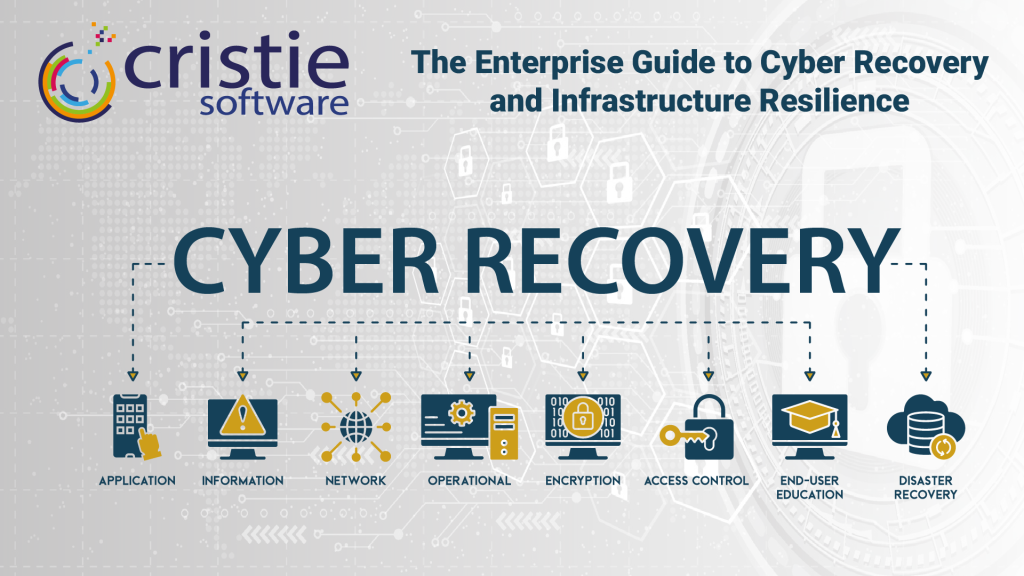
Cleanroom recovery is becoming essential in the fight against ransomware. By restoring systems in an isolated environment, organizations can validate integrity, eliminate hidden threats, and prevent reinfection. This approach ensures secure, reliable recovery of infrastructure, helping businesses minimise downtime and strengthen cyber resilience after sophisticated cyberattacks.

Modern ransomware targets entire infrastructures, not just data. Traditional backups often fail because they don’t restore operating systems or configurations. This guide explores building a cyber-resilient strategy using automated system recovery and cleanroom environments to bridge the gap between backup and full operational restoration, ensuring rapid recovery after a sophisticated attack.

When cyberattacks cripple critical infrastructure, organizations must rebuild systems quickly and securely. Bare metal recovery enables complete physical system recovery by restoring operating systems, applications, and data from trusted backups. Automated recovery solutions accelerate ransomware system recovery, reduce downtime, and help organizations restore operations rapidly after major cyber incidents worldwide.