
Cristie VA 5.3.1 What’s New
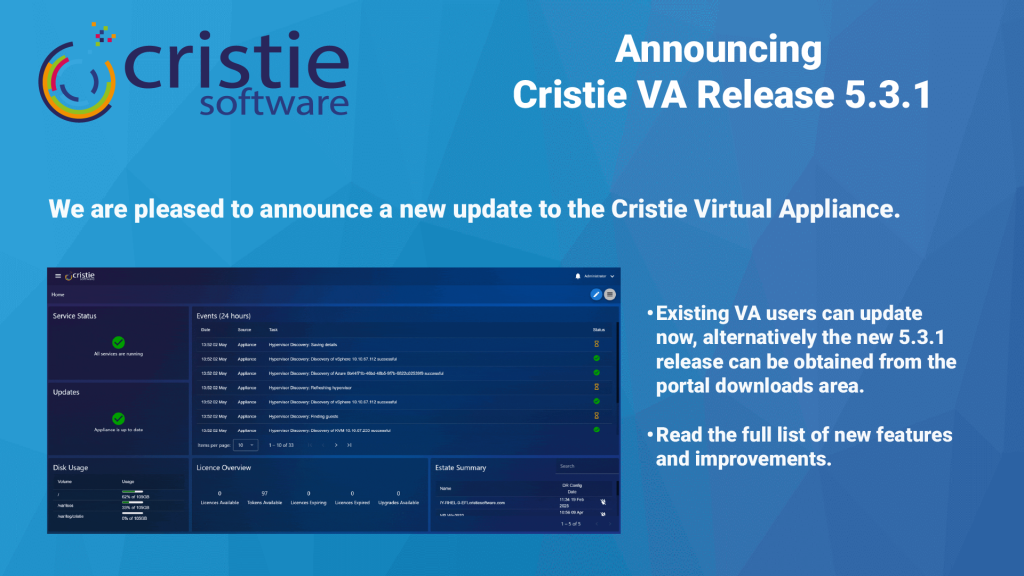
Here’s an update on what’s new for the Cristie Virtual Appliance. The 5.3.1 release includes lots of new functionality including Continuous Recovery Assurance for Rubrik VM snapshots.
Ready for true enterprise resilience? Start your free Cristie trial.
Automated system recovery of over 8000 physical systems supporting critical service infrastructure.
Tiered recovery of over 150 Active Directory and Domain Controllers supporting applications globally.
Improved recovery time objectives (RTO) for critical services to meet regulatory compliance impact tolerance guidelines.
Easy setup and teardown of system recovery test environments reducing administrative overhead.
Elimination of manual intervention from physical machine recovery plus integration with IPMI boot management tools.

As a major universal bank providing services such as retail banking operations, consumer credit card business, wealth management, and corporate banking for small, medium and large-sized businesses, the organization holds Systemically Important Financial Institution (SIFI) classification. The latest UK financial sector regulations regarding Operational Resilience require applicable firms to be able to restore important business services following any ‘severe but plausible’ outage scenarios as a top priority. Important business services are defined as those which, if disrupted, would impact the PRA & FCA objectives and thereby the public interest.Â
The bank saw opportunities to improve automated system recovery processes in order to guarantee the timely recovery of important business services within the impact tolerance guidelines of the new Operational Resilience directives. Automated system recovery at scale also presented network and user credential input demands that were in need of automation.
Regulatory policies issued by the PRA & FCA require UK financial institutions to guarantee the timely recovery of important business services within the impact tolerance guidelines of directives covering Operational Resilience. System Recovery is a core component of Operational Resilience and the organization determined that the current recovery workflow could be improved to reduce recovery times, assist scalability and provide automated recovery for multiple systems supporting important business services. To meet both internal and regulatory objectives there was a desire to improve recovery with a solution that could integrate with existing backup software, work seamlessly with Intelligent Platform Management Interface (IPMI) tools, and eliminate the need for manual entry of system credentials.
Using Cristie Recovery (RBMR) software in conjunction with the existing Rubrik Security Cloud backup environment the protection of entire backup server estates could be unified into a single recovery workflow. Leveraging the Cristie Virtual Appliance, recovery jobs were created to fully automate the recovery of physical systems based on business unit and application groups. This included integration with hardware management layers to facilitate the boot initiation process in line with the existing policies and procedures.
Business unit application groups scaling from tens of systems to thousands of systems in a single group that can be recovered simultaneously allowing entire data centers to be recovered in a few hours. Due to the requirements of 30 day password expirations, Cristie provided additional enhancements to integrate with key-management systems avoiding the need to amend the automated recovery workflow every 30 days. Cristie Recovery software also integrated with existing boot management processes (IPMI) to further facilitate recovery automation and server provisioning.

Here’s an update on what’s new for the Cristie Virtual Appliance. The 5.3.1 release includes lots of new functionality including Continuous Recovery Assurance for Rubrik VM snapshots.

Cleanroom recovery is becoming essential in the fight against ransomware. By restoring systems in an isolated environment, organizations can validate integrity, eliminate hidden threats, and prevent reinfection. This approach ensures secure, reliable recovery of infrastructure, helping businesses minimise downtime and strengthen cyber resilience after sophisticated cyberattacks.

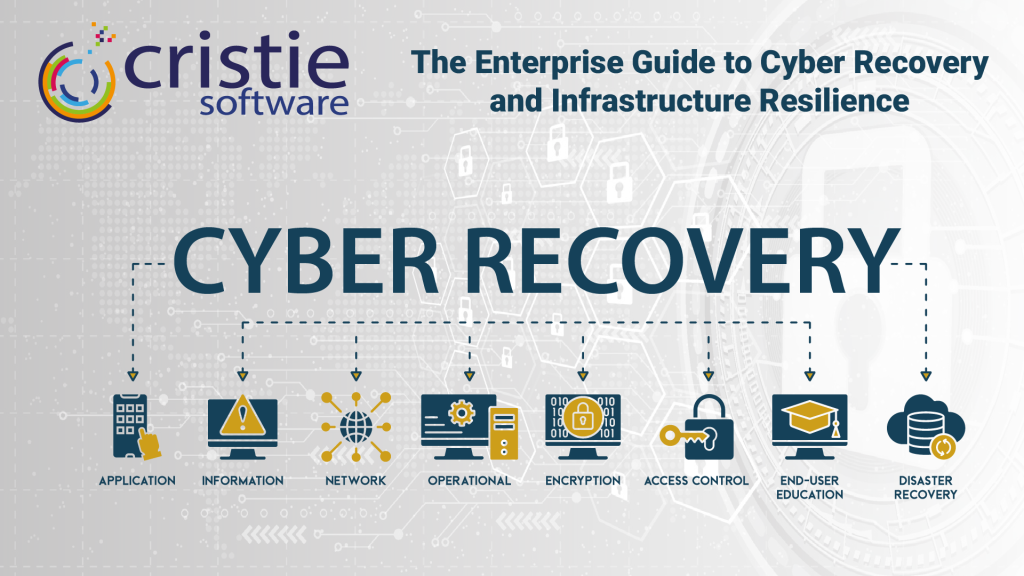
Modern ransomware targets entire infrastructures, not just data. Traditional backups often fail because they don’t restore operating systems or configurations. This guide explores building a cyber-resilient strategy using automated system recovery and cleanroom environments to bridge the gap between backup and full operational restoration, ensuring rapid recovery after a sophisticated attack.

When cyberattacks cripple critical infrastructure, organizations must rebuild systems quickly and securely. Bare metal recovery enables complete physical system recovery by restoring operating systems, applications, and data from trusted backups. Automated recovery solutions accelerate ransomware system recovery, reduce downtime, and help organizations restore operations rapidly after major cyber incidents worldwide.