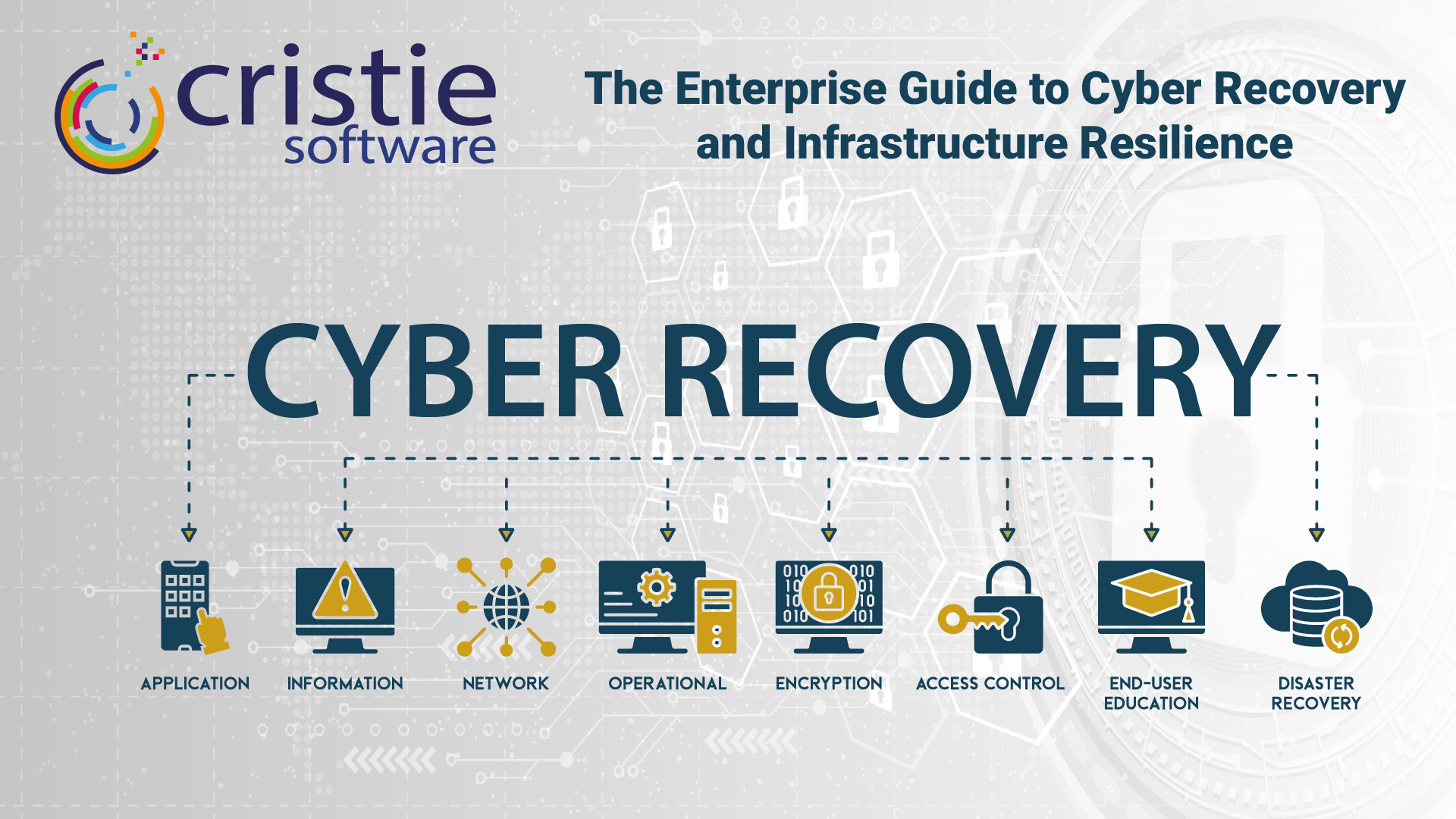
Cyberattacks are no longer rare events. Ransomware, infrastructure compromise, and supply chain attacks have made operational disruption a matter of when—not if. For enterprise IT leaders, the challenge is no longer simply preventing attacks. The critical question is: How quickly can your organization recover when a cyber incident occurs? This is where cyber recovery becomes essential. Cyber recovery focuses on restoring systems, infrastructure, and operations after cyber incidents—securely, reliably, and as quickly as possible.
This guide explains how cyber recovery works, why it matters, and how organizations can build resilient infrastructure capable of withstanding modern cyber threats.
The registry is used as a critical tool for attackers to maintain control over a system.
of all resident malware adds itself to “Run” keys so it restarts every time you boot your PC.
of enterprise attacks use scripts or shellcode in “hidden” keys, allowing the virus to run entirely in your computer’s RAM.
Statistic: 76% of organizations require more than 100 days to achieve full recovery, including secondary systems and data validation (IBM 2025 Cost of Data Breach Report).
Cyber recovery refers to the process of restoring systems and operations after a cyber incident while ensuring the recovered environment is secure and free from compromise.
Unlike traditional disaster recovery, which primarily addresses infrastructure failures, cyber recovery focuses specifically on malicious attacks, including ransomware and data breaches.
Effective cyber recovery involves restoring:
The goal is not just to restore systems—but to restore them securely and confidently.
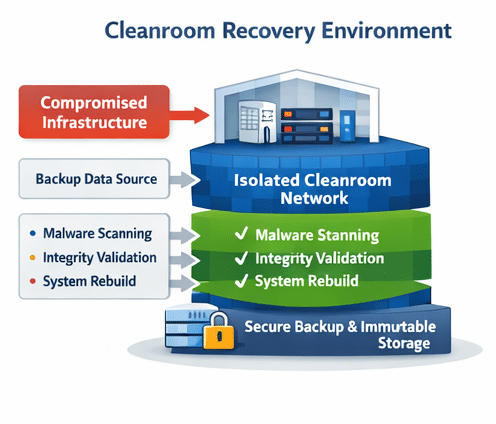
Systems are restored into a virtual, isolated Clean Room environment.
✅
Automated and manual testing is performed to check for system integrity, malware remnants, or misconfigurations.
✅
Once verified, the systems are migrated back to the production environment, or transitioned into a new clean production state.
✅
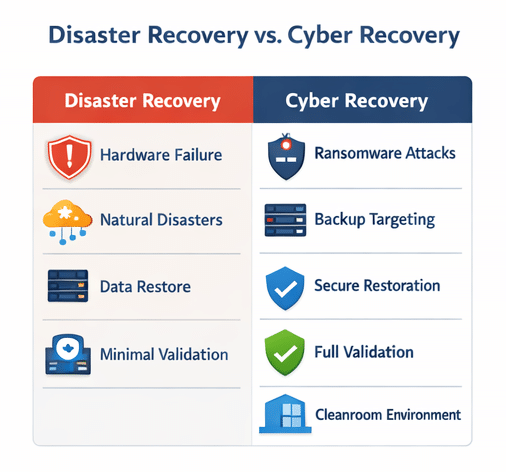
Traditional disaster recovery was designed for events such as hardware failures or natural disasters. Cyber recovery must address a different threat landscape.
Because cyberattacks may leave hidden persistence mechanisms behind, recovery processes must include verification and isolation.
| Traditional Disaster Recovery | Cyber Recovery |
|---|---|
|
Focuses on system failures |
Focuses on malicious attacks
|
|
Restores data and systems |
Restores systems securely |
|
Assumes infrastructure is trustworthy |
Assumes infrastructure is trustworthy |
|
Minimal validation |
Extensive validation required |
The rise of ransomware and targeted infrastructure attacks has dramatically increased the importance of recovery capability.
Modern attackers often attempt to:
If organizations cannot recover quickly, operational disruption can extend for days or even weeks.
Cyber recovery enables organizations to restore operations rapidly while minimizing risk.
Backups that once written cannot be altered in any way.
A security framework based on the principle of “never trust, always verify”.
An integrated security solution that continuously monitors end-user devices to detect, investigate, and automatically respond to advanced cyber threats that traditional antivirus software might miss.
The comprehensive strategy for restoring full IT operations after a major catastrophe.
Automated recovery dramatically reduces system rebuild time.
Building an effective cyber recovery strategy requires multiple layers of capability.
Secure Backup and Data Protection
Backup remains the foundation of recovery strategies.
Organizations should ensure backup environments include:
However, backup alone cannot guarantee recovery.
Cyber incidents often require restoring entire operating environments.
Automated system recovery solutions enable organizations to restore:
Automated bare metal recovery dramatically reduces recovery time compared with manual rebuild processes.
Cleanroom recovery provides a secure environment for restoring systems after cyber incidents.
These environments allow organizations to:
Cleanroom recovery has become a best practice for ransomware recovery.
Recovery processes must be validated regularly to ensure they work when needed.
Continuous Recovery Assurance involves:
This ensures organizations remain recovery-ready at all times.
Bare metal recovery forms a foundational layer of modern cyber resilience strategies.
Early detection of suspicious activity helps organizations respond before attacks escalate.
Advanced monitoring tools can detect:
These capabilities improve overall cyber resilience. Cristie Software offers Advanced Anomaly Detection which can provide early warning of malicious file encrpytion,
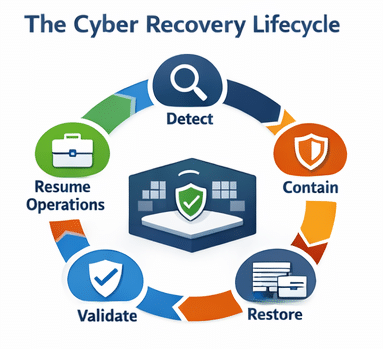
Cyber recovery strategies typically follow a lifecycle approach.
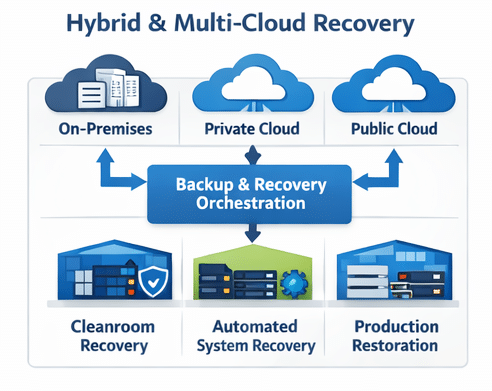
Modern IT environments are distributed across multiple platforms.
Organizations may operate across:
Cyber recovery solutions must support recovery across these environments to ensure operational continuity.
Automation is transforming how organizations approach recovery.
Automated recovery enables organizations to:
Automation allows organizations to scale recovery across complex infrastructure environments.
Many regulatory frameworks now emphasize recovery capability, not just prevention.
Examples include:
Organizations must demonstrate that they can restore systems and operations quickly and securely.
Cyber recovery capabilities help organizations meet these requirements.
Cyber recovery is evolving rapidly as organizations adopt new resilience strategies.
Key trends include:
These technologies will shape the future of enterprise resilience.
Cristie Software enables organizations to build resilient cyber recovery infrastructure by providing solutions that support:
Cristie solutions integrate seamlessly with leading data protection platforms including Cohesity, Rubrik, Dell Technologies, and IBM.
This enables organizations to transform backup data into rapid, reliable operational recovery.
 Learn more about Cristie recovery solutions https://www.cristie.com/systemrecovery/
Cyber recovery is the process of restoring systems and infrastructure after a cyberattack while ensuring recovered systems are secure and free from compromise.
Cyber recovery focuses specifically on recovering from malicious attacks and includes additional security validation steps.
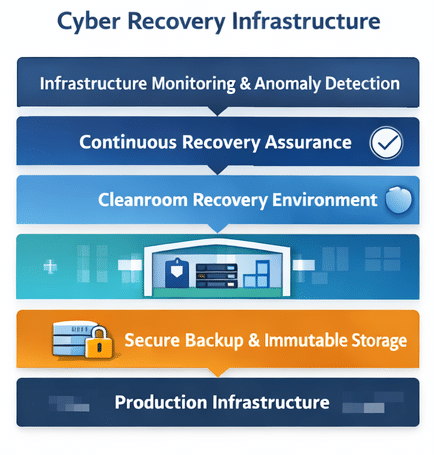
Key technologies include secure backup platforms, automated system recovery, cleanroom recovery environments, continuous recovery assurance, and infrastructure monitoring.
Organizations can improve readiness by automating system recovery, protecting backup infrastructure, testing recovery processes regularly, and implementing secure recovery environments.