
Cristie VA 5.3.1 What’s New
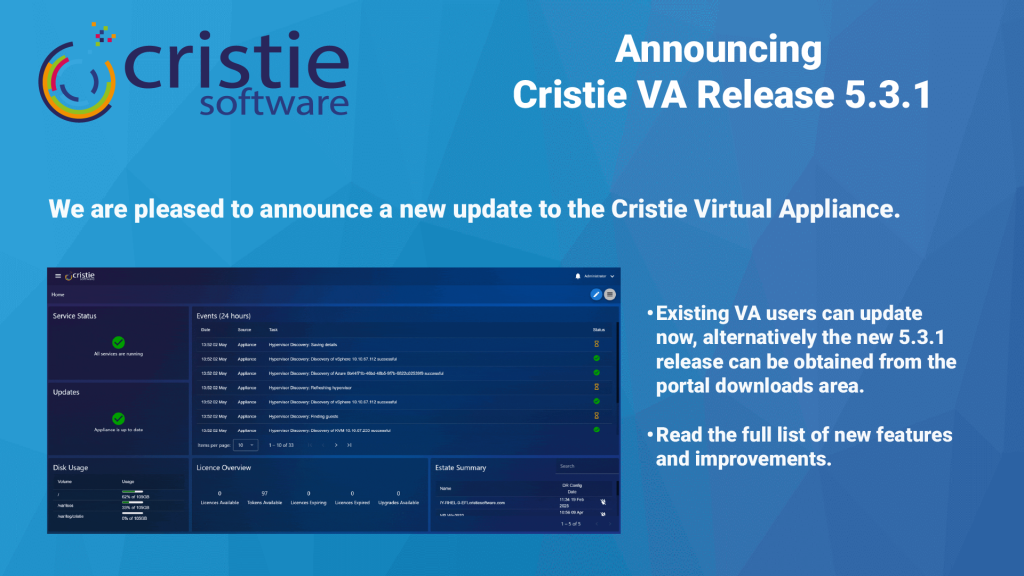
Here’s an update on what’s new for the Cristie Virtual Appliance. The 5.3.1 release includes lots of new functionality including Continuous Recovery Assurance for Rubrik VM snapshots.
Eliminate central data center backup dependency for remote sites with local recovery and replication options.
Replicate systems to virtual machine disk files which do not require a live virtual standby machine and associated compute resources.
Replicate to cloud-based or local S3 Object storage for added data redundancy.
Increase the availability to your system recovery platform with Virtual Appliance Clustering.
Benefit from additional security for recovery and replication images with the in-built data protection features of S3 Object Storage.

A wholesale and retail business responsible for the total flow of goods from manufacturer to market covering segments including grocery retail, industrial household, and convenient stores. The organization engages with over 1200 business partners, 1000 independent retailers and upwards of 41,000 direct and associated staff members. With over 1800 grocery stores plus 900 additional supported points of sale (POS), it was determined that all remote locations should have operational autonomy with fast and secure local backup & recovery capabilities to maintain business operations in the event of any centralized outage or cyber-attack.
Centralization of IT resources offers benefits, but it can also present single points of failure. The retail sector is typified by having multiple physical outlets which may rely on a central resource for system recovery and inventory control. Many high-profile cyber-attacks have rendered retail outlets unable to process transactions when point of sale terminals have been reliant on a central resource. In addition, the recovery of multiple remote outlets from a central point, which may number into the thousands, can create processing and network bottlenecks impacting recovery times. To mitigate these factors, the organization required a cost-effective solution that would provide retail outlets with local recovery capabilities to maintain business operations in the event of a centralized cyber-attack. The solution would need to provide native data security and the flexibility to support local and centralized recovery options.
Each remote location was equipped with a mini-PC running a lightweight hypervisor supporting Cristie CloneManager and Cristie Virtual Appliance (VA) software. To minimize the required compute resources at each location CloneManager offline replication was used which periodically writes replicas of running physical machines directly to system image files stored on a local S3-based storage device. Local storage provides the fastest possible recovery time for physical to physical (P2P) machine recovery in the event of a failure. S3 Object Lock was enabled for stored images providing a write-once-read-many (WORM) model. S3 Object Lock can prevent data from being deleted or overwritten for a fixed amount of time, or indefinitely, providing add an extra layer of protection against ransomware or accidental deletion.
Using offline replication was sufficient to meet Recovery Time Objectives (RTO) for remote locations, while the reduction in compute resources offers significant cost savings. The solution provides the flexibility to use cloud based S3 storage if required. In addition, VA clustering was enabled providing a mirrored VA instance at the central site that could be used to recover remote locations if the local VA instance was compromised. Cristie Recovery software was also deployed at each location to undertake a full weekly backup to the central data center. Each retail outlet can restore business services quickly if required without dependence on a central resource, however, the implementation provides full recovery flexibility and redundancy.

Here’s an update on what’s new for the Cristie Virtual Appliance. The 5.3.1 release includes lots of new functionality including Continuous Recovery Assurance for Rubrik VM snapshots.

Cleanroom recovery is becoming essential in the fight against ransomware. By restoring systems in an isolated environment, organizations can validate integrity, eliminate hidden threats, and prevent reinfection. This approach ensures secure, reliable recovery of infrastructure, helping businesses minimise downtime and strengthen cyber resilience after sophisticated cyberattacks.

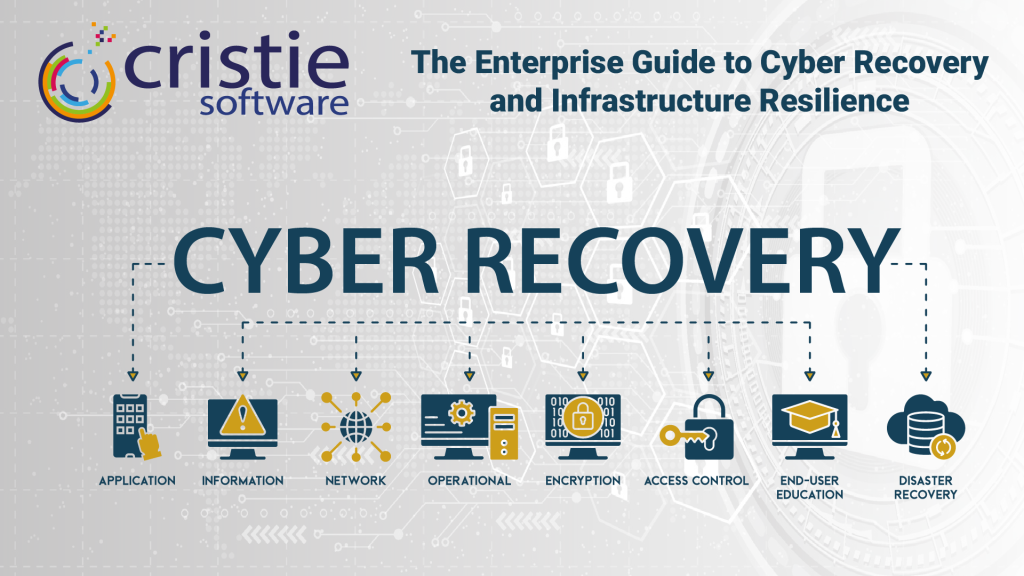
Modern ransomware targets entire infrastructures, not just data. Traditional backups often fail because they don’t restore operating systems or configurations. This guide explores building a cyber-resilient strategy using automated system recovery and cleanroom environments to bridge the gap between backup and full operational restoration, ensuring rapid recovery after a sophisticated attack.

When cyberattacks cripple critical infrastructure, organizations must rebuild systems quickly and securely. Bare metal recovery enables complete physical system recovery by restoring operating systems, applications, and data from trusted backups. Automated recovery solutions accelerate ransomware system recovery, reduce downtime, and help organizations restore operations rapidly after major cyber incidents worldwide.