Cristie Automated System Recovery

Data backup and system recovery are not the same – a robust system recovery solution is vital to minimise downtime.

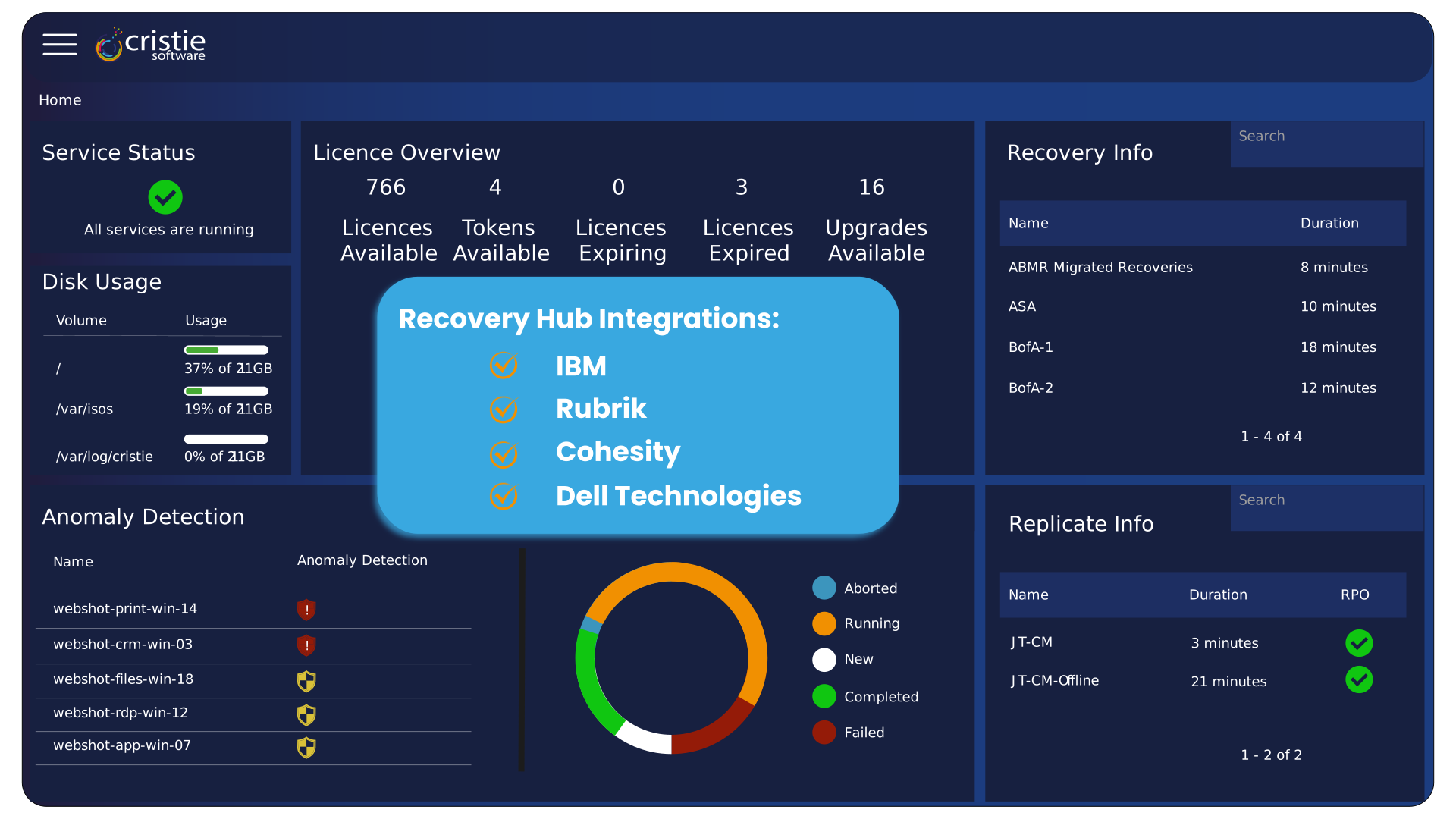
Our Recovery (BMR) software integrates with industry leading backup providers such as IBM, Dell, Cohesity & Rubrik to recover machines directly from their backups. Machines can be restored to dissimilar hardware and also to virtual and cloud environments.

https://www.cristie.com/wp-content/uploads/2022/09/thub-logo1.png

Overview

Cristie automated system recovery provides the operational resilience you need.

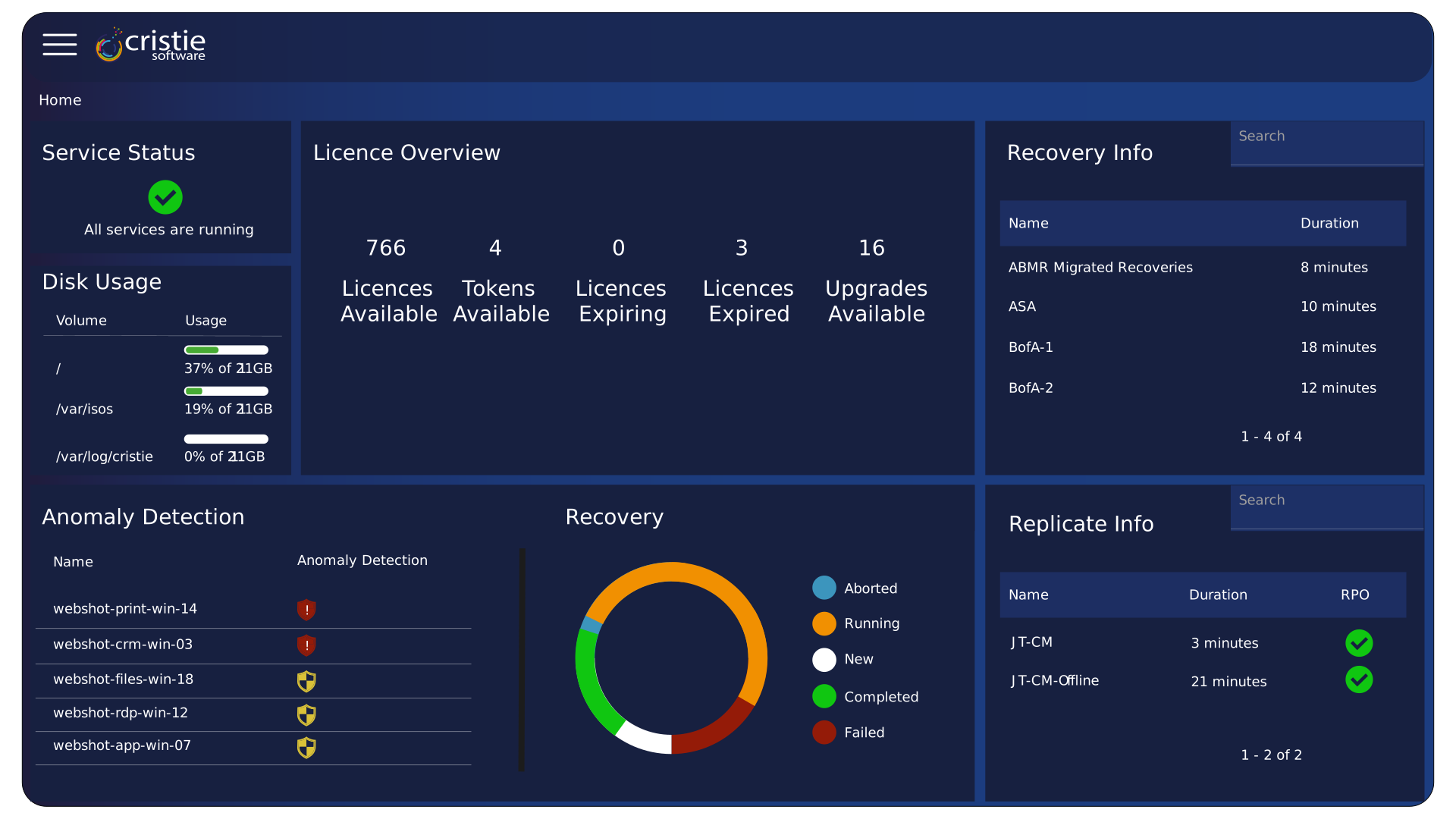
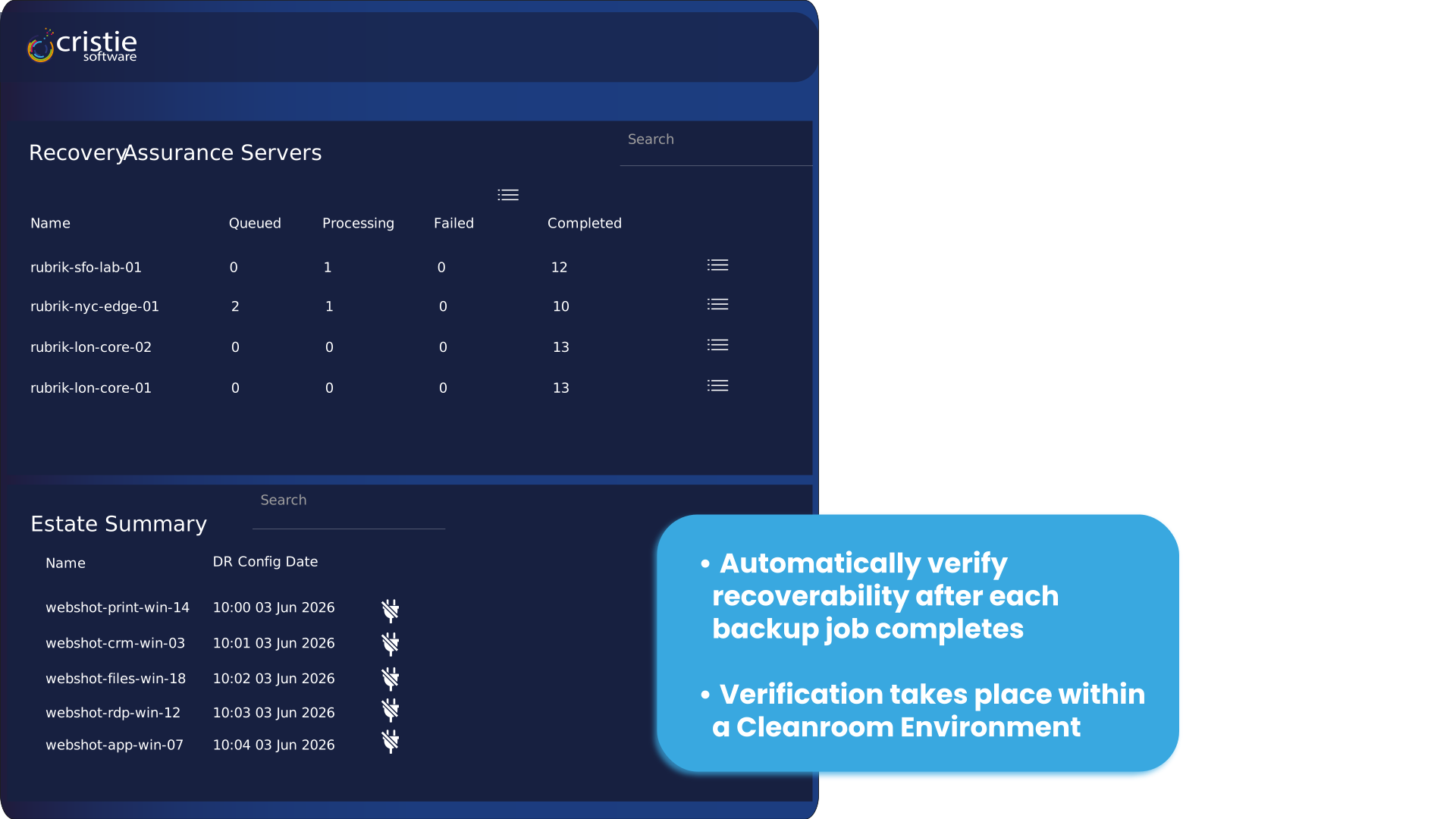
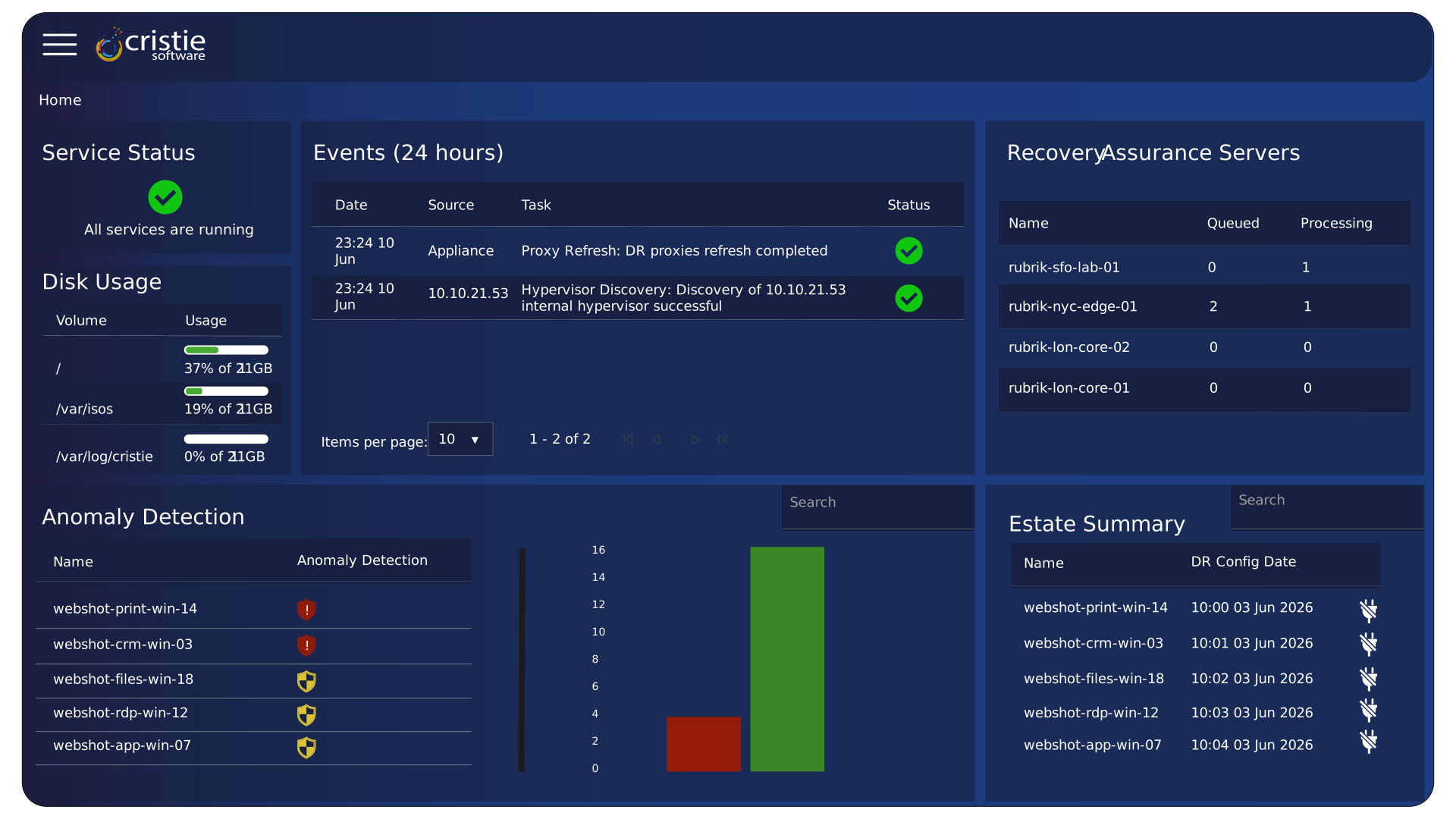
Cristie BMR Recovery automates the recovery of multiple systems ensuring that applications can be restored seamlessly following any outage. Recoveries can be automatically verified with Continuous Recovery Assurance (CRA) after each new backup to ensure your disaster recovery plan will work when you need it most. CRA recovery tests are performed in a Clean Room environment on the Cristie Appliance. 

Automate the recovery of your entire server estate.

Initiate the recovery of multiple systems or system group at the click of a button.

Improve RTO/RPO to meet business SLAs and regulatory compliance.

Schedule recovery simulations without affecting ongoing protection to measure RTO/RPO metrics and verify recovery job integrity.

Simplify system recovery for multi-platform and tiered application environments.

Cristie BMR Recovery provides a single recovery solution for multiple operating systems with the ability to easily orchestrate tiered application recoveries.

Ready for true enterprise resilience? Start your free Cristie trial.

Features

Automated system recovery in any direction across physical, virtual & cloud platforms.

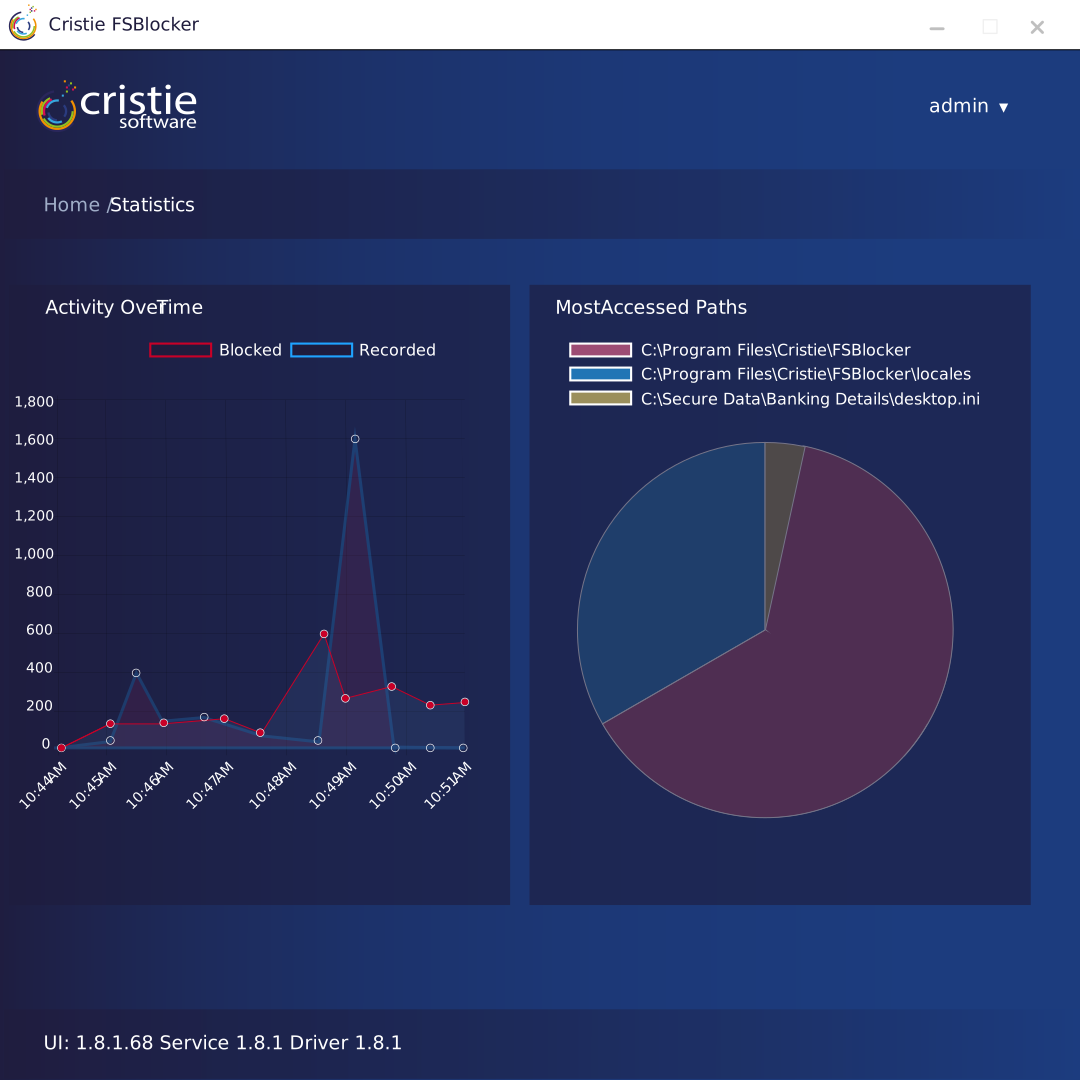
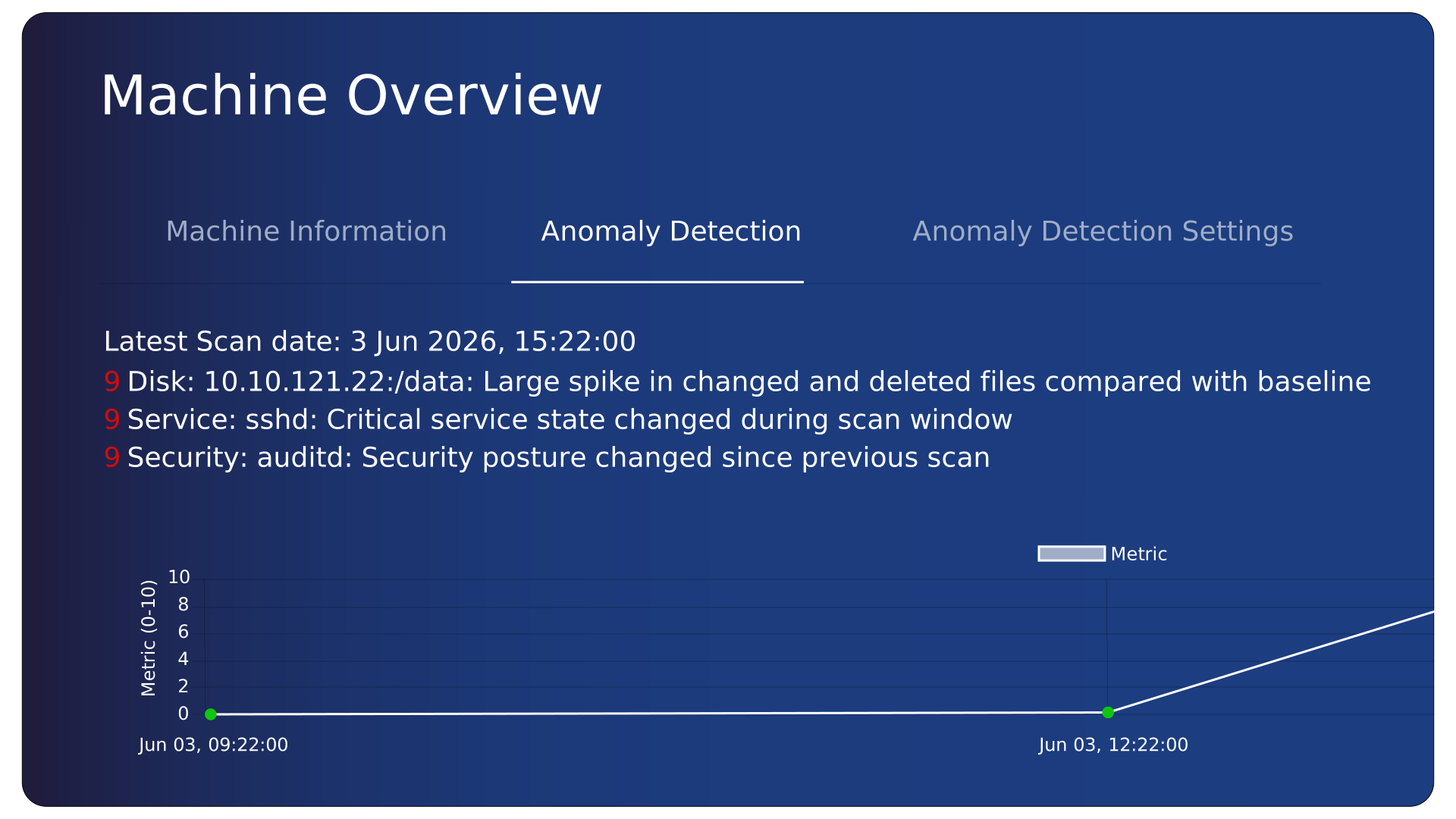
Cristie BMR Recovery easily facilitates system recovery between dissimilar platforms for complete flexibility. Innovative features such as malicious file encryption detection and simulated system recoveries deliver the most advanced and feature rich system recovery workflow.

Quickly detect malicious file encryption

Cristie BMR Recovery applies advanced Machine Learning algorithms to detect malicious file encryption as part of the system recovery workflow.

Automate recovery for your entire data center

Cristie BMR Recovery allows an application group of servers or an entire data center to be automatically recovered quickly in the event of a disaster.

Point-in-time system recoveries from your native backups

Cristie BMR Recovery adds full system recovery capability to point-in-time backups from your native Rubrik, Cohesity, IBM or Dell data protection applications.

Simplify physical system recovery

Cristie BMR Recovery automates the recovery of physical systems and integrates with leading remote access and boot management solutions.

Recover systems in as little as 10 minutes

Recoveries can be carried out in as little as ten minutes to dissimilar physical hardware or to virtual & cloud environments.

Schedule regular recovery simulations

Recovery simulations can be scheduled to monitor recovery functionality and performance. Simulations can take place within an isolated network to not impact the production environment.

Full DR Orchestration & Reporting

Recovery jobs can be scripted for testing and failover including manual tasks such as loading a tape cartridge. Recovery reports can be generated for compliance purposes.

ML driven Recovery Log Analysis

Recovery reports are analyzed by our ML engine providing automatic correction of failure scenarios where possible or corrective guidance.

Virtual Appliance Clustering

VA clustering provides resilience for recovery jobs in the event of an appliance failure.

License & Estate Reporting

The VA can provide a comprehensive report of all licenses and your server estate with CSV export.

Automated Recoveries

This allows an application group of servers or an entire data center to be recovered quickly.

Recovery to Isolated Networks

Allows automated recovery testing without impacting the production environment. In addition, DR automation can shutdown or delete the DR environment after testing, reducing consumption costs where cloud is being used.

Point in time recoveries

Cristie BMR provides point in time recoveries as supported by the host backup application.

Recovery Log Analysis

Recovery reports are analyzed by our AI engine providing automatic detection of any anomalies.

Email Notifications

Receive email notifications of any recovery errors, failures or detected anomalies.

Full DR Orchestration & Reporting

Recovery processes can be scripted for testing and failover including manual tasks such as loading a tape cartridge. Recovery email reports can be generated for compliance purposes.

Legacy Platform Support

Recoveries are supported on Windows, Linux, AIX and Solaris operating systems including many older legacy versions.

Fast recovery to dissimilar hardware

Recoveries can be carried out in as little as ten minutes to different physical hardware as well as to virtual & cloud environments.

Enhanced System Recovery for users of Cohesity DataProtect, Dell Avamar, Dell Networker, Dell PowerProtect Data Manager, IBM Spectrum Protect, Rubrik, VMware and AIX.

Use Cases

Learn more about Cristie Recovery, Replication & Migration solutions in specific Use Case scenarios.

Enhanced System Recovery for users of Cohesity DataProtect, Dell Avamar, Dell Networker, Dell PowerProtect Data Manager, IBM Spectrum Protect, Rubrik, VMware and AIX.

The Cristie Software Blog

Continuous Recovery Assurance for DRaaS providers from Cristie Software

Turn DRaaS from passive protection into a recovery certified solution with Continuous Recovery Assurance

DRaaS: Automatically prove recoverability of every backup with Continuous Recovery Assurance What is Disaster Recovery as a Service (DRaaS)? Disaster Recovery as a Service (DRaaS) is a cloud-based solution that enables organizations to back up critical systems and data and quickly restore them in the event of a disaster, whether it’s caused by cyberattacks, hardware failure, natural events, or human error. Unlike traditional backup approaches that often require manual intervention and on-premises infrastructure, DRaaS replicates entire systems—including operating systems, applications, and configurations—to a secure cloud environment. This allows businesses to recover their IT operations remotely and rapidly, minimizing downtime and maintaining business continuity. With flexible, scalable delivery models, DRaaS is particularly valuable for organizations seeking to reduce the complexity, cost, and risk of managing disaster recovery in-house. Traditionally, DRaaS does not include automated recovery verification – this is where Cristie Continuous Recovery Assurance transforms the capabilities for DRaaS providers and end users.   The DRaaS Market Surge: What’s Driving Growth According to a 2025 market‑forecast report from Knowledge Sourcing Intelligence, the global Disaster Recovery as a Service (DRaaS) Market is projected to expand from USD 13.660 billion in 2025 to USD 30.629 billion in 2030, representing a robust compound annual growth rate (CAGR) of 17.53%. This strong growth outlook reflects a broad shift in enterprise IT strategies. Rapid digital transformation, rising ransomware and cyber‑threat risk, and regulatory pressure for business continuity are fuelling demand for cloud‑based disaster recovery. Organizations increasingly prefer DRaaS over traditional on‑premises disaster recovery, drawn by scalability, cost efficiency, and operational agility. Other market studies echo this trend: for example, a report by Grand View Research estimates the DRaaS market will grow to USD 74.34 billion by 2030, driven by growing demand for business continuity and data protection. (Grand View Research) $13.66B DRaaS Market 2025 Current global market value $30.63B Projected 2030 Expected market expansion 17.53% CAGR Growth Compound annual growth rate   What this means for IT Decision Makers and MSPs? For IT leaders, C‑level executives, and MSPs (Managed Service Providers), the projected DRaaS growth signals three important shifts:   DRaaS is becoming mainstream From a niche to a core component of IT resilience strategy. In fact, some organizations are deploying DRaaS within their own private cloud networks. ✅   Higher expectations around recovery reliability With more organizations depending on DRaaS, “simply having backups” is no longer enough — customers now expect recovery guarantees. ✅   Opportunities for MSPs to differentiate Providers that offer not only replication, but automated and validated recovery workflows will gain an edge in service quality and trust. ✅ This is where advanced capabilities like Continuous Recovery Assurance become a differentiator.   Continuous Recovery Assurance: From Backup to Verified DRaaS Recovery Traditional DRaaS focuses on backing up data or replicating systems; it rarely ensures that those backups can be reliably restored when disaster strikes. That “hope‑and‑pray” model leaves organizations vulnerable; especially in ransomware or major outage scenarios when time is critical. Cristie Software addresses this gap through its Continuous Recovery Assurance capability, an approach that automates system recovery validation within a Clean Room environment after the completion of each successful backup job, giving confidence that: Backups are intact Backups have integrity and have not been corrupted or encrypted. System restores will succeed Entire system restores will succeed, including OS boot & application health. System restores will succeed Entire system restores will succeed, including OS boot & application health. Full stack recovery Recovery works across the full stack: OS, applications, data — not just files. In effect, Continuous Recovery Assurance turns DRaaS from passive protection into an actively verified, resilience‑certified service.   Why Continuous Recovery Assurance Matters for MSPs and End Users For Managed Service Providers Service differentiation. MSPs can offer “recovery‑proven DRaaS,” a premium service level that companies increasingly demand. Reduced liability and risk. By proving recovery workflows periodically, MSPs minimize the risk of failed restores, a key concern in SLAs and compliance audits. Scalability and automation. Cristie’s system supports scheduled, repeatable tests, enabling MSPs to validate hundreds of customer systems without manual overhead. For End Users (Enterprise IT Teams) Confidence in business continuity. Continuous Recovery Assurance reduces uncertainty, especially in cyber‑resilience planning and disaster‑recovery testing. Faster, predictable recovery. In an outage, organizations can restore with minimal downtime, knowing that backups are verified and recoverable; not just “there somewhere.” Regulatory and compliance support. Many regulations require not just backups, but proven recoverability; an area where verified recovery helps meet audit and compliance standards.   The table below highlights the differences between Traditional Backup, Disaster Recovery as a Service (DRaaS), and DRaaS with Cristie Continuous Recovery Assurance: Feature / Capability Traditional Backup DRaaS DRaaS with Continuous Recovery Assurance Automatic Testing / Validation of Backups Manual (if done at all) Some periodic testing ✅ Fully automated, ongoing recovery testing Cyber Resilience Limited recovery might fail after an attack Improved, but still risk of untested backups ✅ High: Automated verification ensures backups are reliable Complexity of Setup & Maintenance Requires in-house effort and hardware Managed by service provider ✅ Fully automated with added validation layer Cloud Integration / Flexibility Minimal Cloud-native or hybrid capabilities ✅ Cloud-ready with support for physical, hybrid and multi-cloud Cost Efficiency Lower upfront, but high TCO over time Subscription-based; better scalability ✅ Efficient cost-to-value ratio with reduced failure risk Usability for MSPs Limited Offers services, but with manual verification ✅ Ideal for MSPs: Adds service value with automated testing Regulatory Compliance Support Depends on in-house expertise Better, but needs manual audit support ✅ Enhanced audit-ready with validated recovery records User Confidence in Recovery Often uncertain Moderate ✅ High: Backed by ongoing successful recovery tests Key: ✅ = Feature is robust and built-in Positioning Cristie Software in Today’s DRaaS Surge By offering Continuous Recovery Assurance, Cristie Software sets a higher bar: not just replication or bare metal recovery (BMR), but recovery‑verified resilience. That makes Cristie a valuable partner for both MSPs seeking to offer top‑tier DRaaS, and enterprises needing guaranteed data integrity and rapid recovery. Continuous Recovery Assurance can automatically validate

Read More »
Cristie Software introduces System Recovery PBMR for Dell Technologies PowerProtect Data Manager

Cristie Software introduces System Recovery PBMR for Dell Technologies PowerProtect Data Manager

Cristie Software introduces System Recovery PBMR for Dell Technologies PowerProtect Data Manager Cristie Software announces general availability of System Recovery PBMR providing automated system recovery and verification for Dell Technologies PowerProtect Data Manager. London, UK, 15 September 2025 – Cristie Software, a leader in system recovery, replication, and migration technologies, today announced general availability of Cristie System Recovery PBMR for Dell Technologies PowerProtect Data Manager. This new integration extends PowerProtect Data Manager environments with full system recovery capabilities, enabling bare machine recovery (BMR) to physical, virtual, or cloud-based targets. PBMR also features powerful automated recovery tools, including Continuous Recovery Assurance—which automatically performs a full system recovery within a clean room environment whenever a new backup is detected on a protected system. PBMR enhances Cristie’s system recovery portfolio, joining existing solutions for Dell Technologies Avamar and Networker platforms. “For over a decade, we’ve empowered Dell Technologies backup software users with robust system recovery capabilities. We’re proud to continue advancing our solutions to ensure Dell customers benefit from seamless, modern recovery tools fully compatible with the latest backup technologies.,” said Scott Sterry, VP Business Development at Cristie Software. “In today’s evolving cybersecurity landscape, it’s critical for businesses to implement a robust system recovery infrastructure built specifically for cyber resilience. Our Continuous Recovery Assurance reflects Cristie Software’s commitment to strengthening resilience through ongoing innovation—most notably with features like Advanced Anomaly Detection, which offers early warning of suspicious file encryption and potential malware activity.” Cristie Software PBMR adds full system recovery capabilities without the need for any additional backup job administration within Dell Technologies PowerProtect Data Manager. Dell Technologies customers can purchase PBMR licenses from Cristie Software or through the global Dell Technologies partner network. About Cristie Software Cristie Software, established in 2008, supports over 3,000 users across more than 70 countries with advanced system recovery and replication solutions. We serve many of the world’s leading organisations in healthcare, retail, manufacturing, the public sector, and financial services, and we are trusted by a third of the Global Fortune 500. Working through a global network of partners and resellers, we deliver effective, best-in-class solutions that ensure operational continuity and resilience. Our technologies are recommended worldwide by strategic partners including Cohesity, Rubrik, Dell, and IBM—enabling their customers with secure, automated system recovery and recovery orchestration. Cristie Software holds patented technologies focused on automation and machine learning for recovery and replication processes, with several additional innovations currently under patent review. In addition to developing proprietary software, Cristie expands its portfolio through strategic acquisitions, including the license and development rights to SysBack from IBM and the acquisition of Storix Inc.. Learn more at www.cristie.com

Read More »
Cohesity Veritas Merger: Why Cristie Software BMR Unlocks Automated, Large-Scale Recovery

Cohesity Veritas Merger: Why Cristie Software BMR Unlocks Automated, Large-Scale Recovery

Cohesity Veritas Merger: Why Cristie Software BMR Unlocks Automated, Large-Scale Recovery Introduction: A New Era for Enterprise Backup and Recovery The merger of Cohesity and Veritas marks a defining moment in the enterprise backup and recovery market. By combining Cohesity’s modern, cloud-native innovation with Veritas’ decades of market presence, Cohesity Veritas now represents one of the largest data protection companies in the world. While both platforms offer powerful backup and recovery features, many enterprises face a common challenge: how to recover entire server estates quickly and at scale after a disaster. This is where Cristie Software’s Bare Machine Recovery (BMR) solutions—CoBMR for Cohesity and CBMR for Veritas—play a transformative role. The Cohesity–Veritas Merger at a Glance The merger brings together: Cohesity DataProtect: a cloud-ready, scalable backup and recovery platform. Veritas NetBackup: a trusted enterprise backup system with global adoption. Together, they offer customers a unified choice of solutions for hybrid and multi-cloud environments. Backup Strengths of Cohesity and Veritas Cohesity DataProtect: Modern, Scalable Data Protection Cohesity is known for: Unified data management. Cloud-native integration. Rapid backup and restore of VMs, databases, and applications.   Veritas Backup: Traditional Strengths and BMR Capabilities Veritas NetBackup has a BMR feature, but its automation capabilities are limited. Enterprises often find it difficult to scale BMR across large, diverse server estates without manual intervention. The Bare Machine Recovery Challenge Why BMR Is Essential for Enterprise IT Bare Machine Recovery (BMR) restores entire systems from scratch—including the operating system, applications, and configurations. It’s crucial for: Disaster recovery after ransomware or hardware failure. Cloud migrations. Hardware refresh projects. Limitations of Veritas Native BMR While Veritas includes BMR, it lacks the automation depth needed to handle large-scale recovery across hundreds or thousands of physical servers. This gap creates risks in disaster recovery planning. Cristie Software’s Advanced BMR Solutions Cristie CoBMR for Cohesity DataProtect CoBMR integrates directly with Cohesity backups, adding full-system recovery and hardware-independent restores to physical, virtual, or cloud platforms. Cristie CBMR for Veritas NetBackup CBMR extends Veritas NetBackup by providing advanced automation and orchestration for bare machine recovery, scaling to enterprise server estates. The Key Advantage: Automation at Scale Automating Full Server Estate Recoveries Cristie BMR solutions allow IT teams to automate the recovery of entire physical server estates—saving countless hours during large-scale incidents. Consistency, Speed, and Reduced Human Error Automated workflows ensure: Faster recovery times. Reduced manual effort. Consistent and repeatable outcomes.    Benefits of Adding Cristie BMR to Cohesity Veritas Environments Faster RTOs and Greater Flexibility – Get critical systems online within hours, not days. Large-Scale Disaster Recovery for Physical Servers – Recover entire estates in parallel with minimal manual steps. Seamless Multi-Platform Recovery – Restore workloads across physical, virtual, and cloud platforms.   Real-World Use Cases Enterprise Data Center Recovery After Ransomware – Rapid restoration of hundreds of servers simultaneously. Large-Scale Hardware Refresh or Cloud Migration – Move workloads seamlessly between platforms. Automated Compliance Testing of DR Plans – Prove recovery capabilities for audits with scheduled, automated testing.   Why Cristie BMR Complements the Cohesity Veritas Merger Closing the Automation Gap in Veritas BMR While Veritas offers BMR, Cristie’s CBMR adds automation that scales for modern enterprise needs. Strengthening Cohesity Veritas for Hybrid and Multi-Cloud IT By combining Cohesity’s cloud innovation, Veritas’ market presence, and Cristie’s BMR automation, enterprises achieve a future-proof recovery strategy. FAQs on Cristie BMR with Cohesity and Veritas Q1: Does Veritas already include BMR?A1: Yes, Veritas NetBackup includes basic BMR, but it lacks automation for large-scale recovery. Cristie CBMR fills this gap. Q2: How does CoBMR enhance Cohesity DataProtect?A2: CoBMR enables bare metal recovery from Cohesity backups, with full automation and hardware independence. Q3: Can Cristie BMR solutions recover to cloud platforms?A3: Yes, both CoBMR and CBMR support recovery to cloud, physical, and virtual environments. Q4: Is Cristie BMR suitable for large enterprises?A4: Absolutely—Cristie solutions are designed to automate recovery of large physical server estates at scale. Q5: Does Cristie BMR support automated recovery testing?A5: Yes, automated recovery testing ensures compliance and verifies that DR plans will work when needed.   Conclusion: Future-Proofing Recovery with Cristie Software The Cohesity–Veritas merger creates a new force in data protection. Yet, for enterprises with complex infrastructures, automation and scalability in bare machine recovery remain critical. By integrating Cristie CoBMR for Cohesity and Cristie CBMR for Veritas, organizations gain the ability to automate large-scale recovery, reduce downtime, and ensure business continuity in even the most demanding disaster scenarios. Learn more about Cristie Software Bare Machine Recovery.

Read More »

Contact the Cristie Software team for more information

Whatever your replication and data recovery needs, we are here to help.

https://www.cristie.com/wp-content/uploads/2022/09/thub-logo1.png

Contact Us

https://www.cristie.com/wp-content/uploads/2022/09/thub-logo1.png

Thank you for contacting us. We have received your request.

https://www.cristie.com/wp-content/uploads/2019/06/gdpr_130px.png
Privacy Overview

This website uses cookies so that we can provide you with the best user experience possible. Cookie information is stored in your browser and performs functions such as recognising you when you return to our website and helping our team to understand which sections of the website you find most interesting and useful.